


Dukovany Project Prepares for Massive Growth
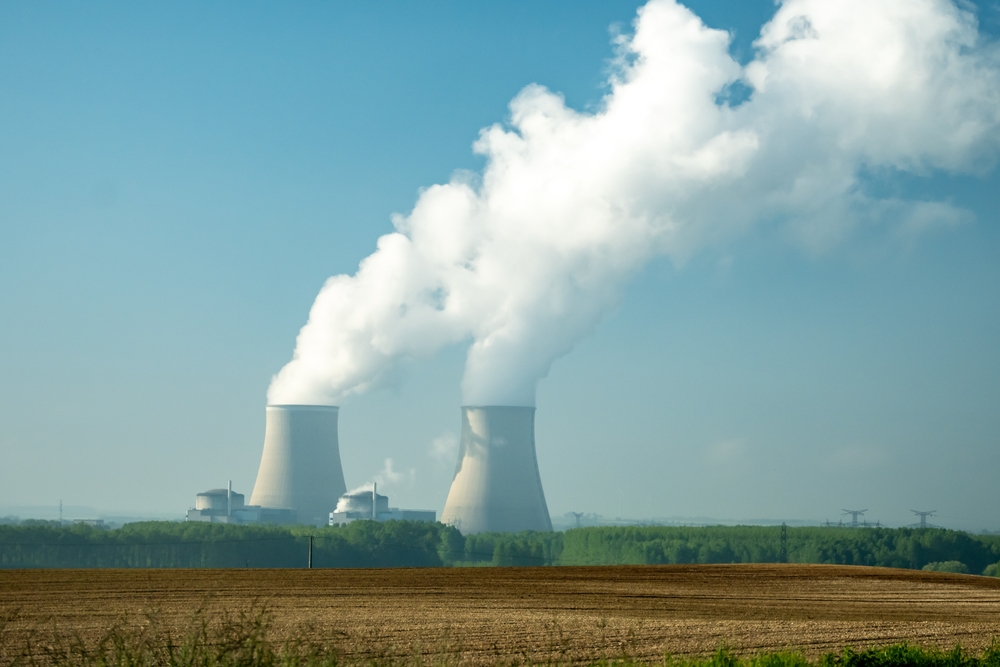
Czechia aims to produce up to 60 percent of its electricity from nuclear power by 2050. The eight cooling towers at Dukovany rise over a construction site for two new reactors. Engineers drill 140 meters underground to confirm geological suitability for the $19 billion project. Officials expect the expansion to double nuclear output and position Czechia among Europe’s most nuclear-reliant nations.
South Korea’s KHNP won a tender to build the reactors, beating France’s EDF. Each reactor will produce over 1,000 megawatts and start operations in the second half of the 2030s. They will complement Dukovany’s four 512-MW units from the 1980s. The contract allows Czechia to add two more reactors at Temelín, which already runs two 1,000-MW units. Officials plan to follow these with small modular reactors.
Petr Závodský, Dukovany CEO, said, “Nuclear will provide 50 to 60 percent of Czech electricity by 2050.” He added the expansion will replace coal, secure affordable energy, meet emission targets, and support demand from data centers and electric vehicles.
Europe Reignites Nuclear Development
Rising energy demand and strict carbon targets drive renewed European interest in nuclear power. Nuclear produces waste but avoids greenhouse gas emissions.
The EU classified nuclear energy as environmentally sustainable, opening access to financing. Czechia, Slovakia, Hungary, and France have benefitted from this policy. Belgium and Sweden reversed phase-out plans, while Denmark and Italy are reconsidering nuclear energy. Poland will join 12 EU nuclear-friendly nations after signing a deal with Westinghouse to build three reactors. In 2024, nuclear provided 24 percent of the EU’s electricity.
Britain signed a cooperation agreement with the United States to expand nuclear capacity. Energy Secretary Ed Miliband called the initiative a “golden age of nuclear.” The UK will invest £14.2 billion to build Sizewell C, its first major nuclear project since 1995. CEZ, 70 percent state-owned, partnered with Rolls-Royce SMR to develop small modular reactors.
Funding, Security, and Controversy
The Dukovany expansion costs over €16 billion. The government will acquire an 80 percent stake and secure a long-term loan. CEZ will repay the loan over 30 years, and the state guarantees revenue for 40 years. EU approval is expected to meet climate-neutral targets by 2050.
Závodský said, “We cannot replace coal without new nuclear units.” Currently, nuclear provides 40 percent of electricity, and coal provides another 40 percent. The government plans to phase out coal by 2033.
Past financing delays slowed expansion. In 2014, CEZ cancelled a Temelín tender after the government refused guarantees. Russia’s Rosatom and China’s CNG were excluded from Dukovany contracts for security reasons after Russia invaded Ukraine. CEZ signed fuel agreements with Westinghouse and France’s Framatome, ensuring independence from Russia. KHNP will supply fuel for 10 years.
Opponents raise concerns about cost and waste storage. Friends of the Earth argue the money could improve energy efficiency instead. Dukovany and Temelín sit near Austria, which abandoned nuclear after Chernobyl. Austria’s parliament rejected Czechia’s small modular reactor plan and remains strongly anti-nuclear.
Czechia faces both public support and cross-border opposition as it advances toward a nuclear-powered future.
