


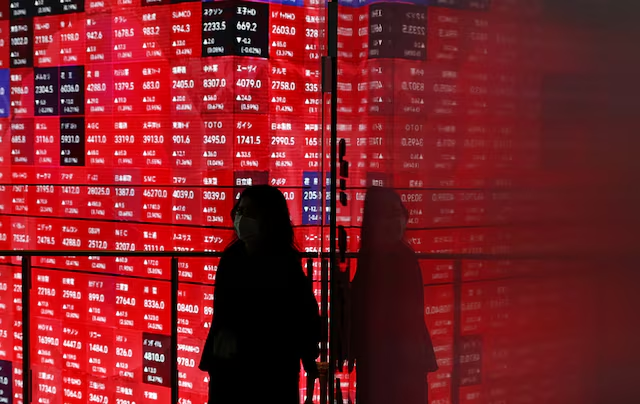
U.S. stock markets climbed sharply after President Trump signaled a softer stance on China. Investors welcomed the shift, which eased concerns over trade conflicts and sparked renewed market optimism.
Major indexes surged as traders responded positively to the prospect of calmer U.S.-China relations. The move helped restore confidence among both institutional and individual investors, who had been wary of escalating trade tensions.
Analysts noted that the softened approach could reduce uncertainty that had weighed on corporate earnings and global markets. Companies sensitive to tariffs and international trade policies saw their stock values rise in response.
The rally reflects broader optimism about economic stability. Many investors see the eased stance as a sign that trade negotiations may progress more smoothly, reducing the risk of abrupt tariffs or retaliatory measures.
Financial experts emphasized that such rebounds are often driven by sentiment as much as fundamentals. “Markets respond quickly to news that lowers geopolitical risk,” one analyst said. “Even small gestures from policymakers can trigger significant gains.”
In addition to U.S.-China trade developments, other factors contributed to the market upswing. Strong earnings reports from key sectors and ongoing economic indicators suggested resilience in the domestic economy. These factors combined with trade optimism to create a favorable environment for investors.
The impact was visible across multiple sectors. Technology, industrials, and consumer goods stocks led the gains, reflecting their exposure to international markets and trade policies. Investors viewed the news as a green light for renewed growth potential in these industries.
Market watchers also pointed to a shift in investor behavior. Many were previously cautious, favoring safe-haven assets amid trade disputes. The announcement encouraged more risk-taking, driving higher volumes in equities and boosting market liquidity.
While optimism is high, analysts caution that trade negotiations remain complex and subject to change. Any future policy shifts could affect market sentiment quickly. Investors are advised to monitor developments closely while maintaining diversified portfolios.
The rebound underscores the sensitivity of global markets to geopolitical cues. Trade relations between the U.S. and China have been a major driver of market volatility over the past year. Eased tensions, even temporarily, can have an immediate and powerful effect on stock performance.
As trading continues, market participants are watching for confirmation that the softened stance will lead to concrete progress. Negotiators from both countries are expected to engage in discussions that may shape future trade agreements and economic collaboration.
Wall Street’s recovery demonstrates how investor confidence is closely linked to policy signals. The trade-focused rebound highlights the interplay between politics and financial markets, emphasizing the importance of monitoring both for effective investment strategies.
