


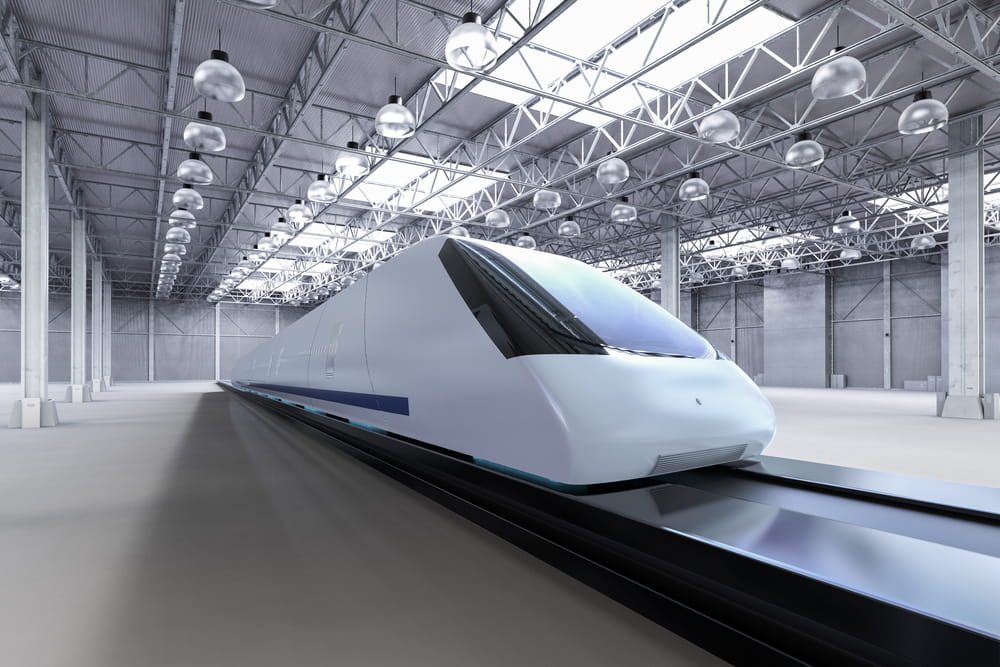
Japan is developing the L0 Series, a next-generation magnetic levitation (maglev) train that could become the fastest in the world. Built and tested by Central Japan Railway Company, the train is designed to reach speeds of up to 603.5 km/h, far beyond today’s fastest commercial services, including China’s Shanghai Maglev.
The L0 Series will run on the new Chuo Shinkansen line, cutting travel time between Tokyo and Nagoya to about 40 minutes, and eventually linking Tokyo, Nagoya and Osaka into a single mega-region. A Tokyo–Osaka journey is expected to take just one hour, compared with more than two hours today.
How it works
The train uses magnetic levitation, lifting it above the track to eliminate friction. Electric motors and powerful magnets allow it to “float” and glide at extreme speeds, but this requires entirely new infrastructure — including long tunnels and dedicated tracks.
Why Europe may not get it
Despite its promise, exporting this technology to Europe would be difficult. The project has already cost around £52bn (€60bn) and has been delayed, with operations now expected in the mid-2030s. Maglev systems cannot run on existing rail lines, demand huge energy input, and carry fewer passengers than many European high-speed trains.
European rail travel also places greater emphasis on comfort, scenery and capacity, rather than ultra-fast point-to-point travel. Outside of business corridors such as London–Paris or London–Brussels, the case for such a train is harder to make.
In short, while Japan is pushing the limits of rail speed, Europe may decide that faster isn’t always better.
