


More Open Water, More Pollution
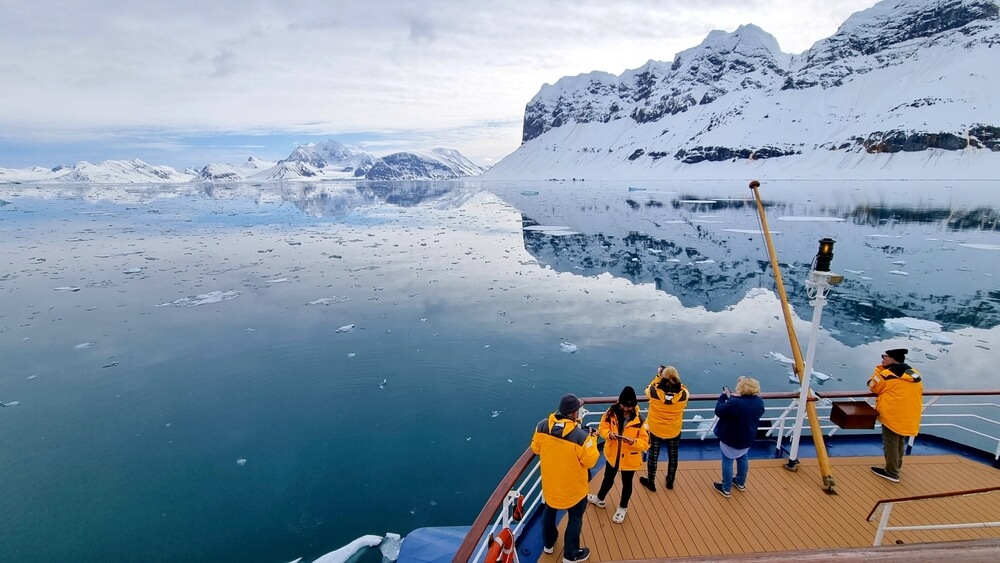
As global temperatures climb and Arctic sea ice melts at record speed, waters that were once impassable are now opening up to ships. Cargo vessels, fishing boats and even cruise liners are increasingly navigating Arctic routes, drawn by shorter travel times and new economic opportunities. But this surge in traffic comes with a hidden cost: black carbon, a fine soot released from ship exhaust that settles on ice and snow, darkening surfaces and accelerating melting.
When ice loses its ability to reflect sunlight, it absorbs more heat, turning the Arctic into a feedback loop of warming and ice loss. “It ends up in a never-ending cycle of increased warming,” says Sian Prior of the Clean Arctic Alliance, which has been urging governments to crack down on ship emissions in the region.
A Push for Cleaner Fuels Meets Political Headwinds
Several countries, including France, Germany, Denmark and the Solomon Islands, are now pressing the International Maritime Organization (IMO) to require ships operating north of the 60th parallel to switch to so-called “polar fuels.” These lighter fuels produce far less black carbon than the heavy residual fuels commonly used today. The proposal is being debated by international shipping regulators this week, with further discussions expected later this year.
Still, progress has been slow. A ban on heavy fuel oil introduced in 2024 has had limited impact due to loopholes that allow exemptions until 2029. Meanwhile, geopolitical tensions — including renewed debate over Greenland’s strategic importance and pushback from climate-skeptical leaders — have pushed environmental concerns down the priority list. Efforts to impose broader carbon fees on shipping were delayed after strong political opposition, leaving the future of tougher regulations uncertain.
Traffic and Emissions Are Rising Fast
The numbers tell a stark story. Between 2013 and 2023, ship traffic in Arctic waters increased by 37%, while the total distance sailed more than doubled. Black carbon emissions rose alongside it, climbing from about 2,700 tonnes in 2019 to over 3,300 tonnes in 2024. Fishing vessels account for the largest share of that pollution.
Even Arctic nations face internal conflicts over how far to go. Iceland, often praised for its green energy leadership, has struggled to regulate marine pollution due to resistance from its powerful fishing industry. Environmental groups argue that fuel rules are the most realistic way to cut emissions, since limiting ship traffic outright is unlikely.
Some companies are choosing caution. Mediterranean Shipping Company, the world’s largest container shipper, has publicly pledged to avoid the Northern Sea Route, citing environmental risks and safety concerns. But with economic incentives growing and ice continuing to retreat, the pressure on the Arctic — and the debate over how to protect it — is only intensifying.
