


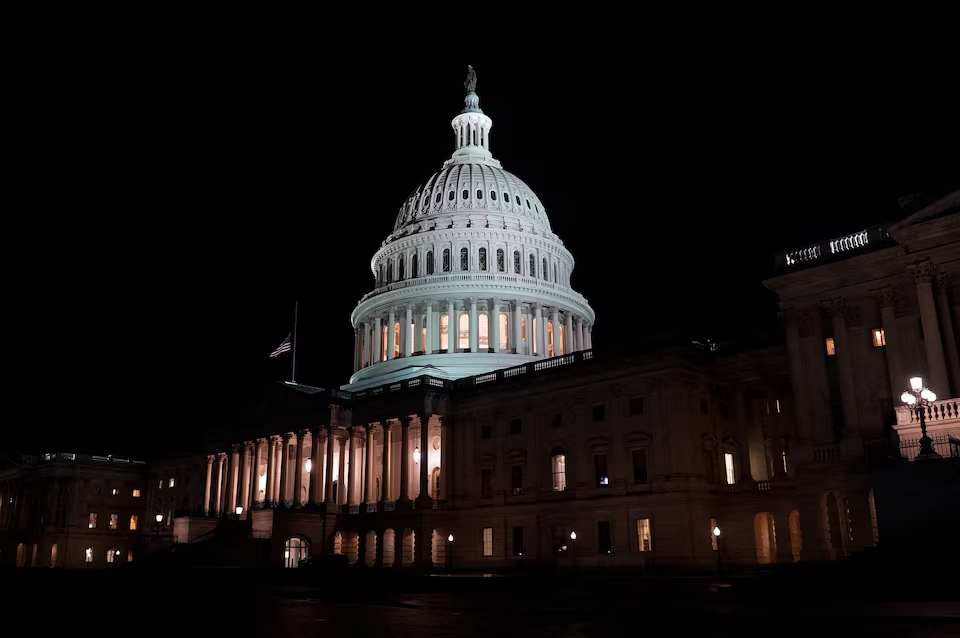
The U.S. government shutdown has officially ended after 43 days, marking the longest closure in American history. President Trump signed a funding bill that reopens most federal agencies and restores pay for hundreds of thousands of federal workers. Critical services, disrupted during the shutdown, are also resuming across the country.
Federal employees, many of whom had gone without pay since the shutdown began, will now receive back pay. The measure also allows agencies to continue operations, providing essential services to the public. Departments ranging from national parks to public health offices are resuming normal functions.
The 43-day shutdown began over a budget impasse. Lawmakers struggled to reach an agreement on federal funding, with disagreements over spending priorities causing the historic delay. The closure affected numerous federal programs, including food inspections, security screenings, and government research initiatives.
Millions of Americans felt the shutdown’s impact. Federal employees faced financial hardships, contractors went unpaid, and services like passport processing slowed dramatically. National parks were closed, and some public facilities operated with limited staff. The economic consequences were widespread, as local businesses that rely on federal employees saw reduced revenue.
The funding bill signed by President Trump represents a temporary solution. It allows agencies to operate while lawmakers continue discussions on long-term budget plans. Many analysts see the bill as a short-term measure to end immediate disruptions while Congress negotiates future spending priorities.
Labor unions and federal employee groups welcomed the bill. “This is a relief for our members who have been working without pay for weeks,” said one representative. Employees expressed gratitude for the restoration of salaries and the ability to plan their finances again.
Experts note that while the shutdown is over, the underlying issues remain. Budget negotiations and political disagreements may still pose risks for government operations in the future. Economists warn that repeated shutdowns can erode public trust and affect the economy if they become frequent.
Despite the challenges, reopening the government is expected to stabilize federal operations. Agencies are quickly resuming normal duties, ensuring public access to essential services. Transportation security, law enforcement, and social programs are returning to full operation, easing disruptions for citizens nationwide.
The shutdown has also sparked discussions on preventing future closures. Policymakers are exploring mechanisms to maintain funding and avoid similar standoffs. Some suggest automatic continuing resolutions or reforms to the budget process to prevent extended closures.
As federal workers return, there is a focus on catching up with delayed work. Agencies will face the task of managing backlogs caused by the shutdown, including delayed approvals, inspections, and public services. Despite the challenges, the reopening provides a path forward for normal government functions.
This historic shutdown will be remembered as a major event in U.S. political history. The resolution brings relief to federal employees, businesses, and the public. While temporary funding measures are in place, lawmakers continue to face the challenge of creating stable, long-term budgets to avoid similar disruptions in the future.
