


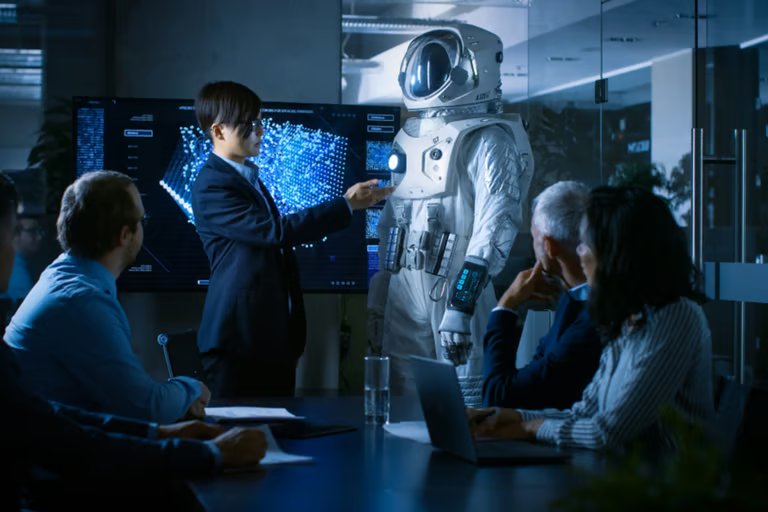
NASA and Google have introduced an AI astronaut health system to support crew members during long space missions. The “Crew Medical Officer Digital Assistant” (CMODA) provides real-time monitoring and predictive analysis, helping astronauts manage medical concerns far from Earth.
The AI tool is designed to ensure timely medical attention even when communication delays occur. Long-duration missions to the Moon or Mars can face significant gaps in real-time consultation with Earth-based doctors. CMODA bridges this gap by offering onboard guidance and diagnostics.
CMODA uses advanced sensors and data analysis to monitor vital signs, including heart rate, blood pressure, oxygen levels, and more. By continuously evaluating astronaut health, the system can detect early signs of illness or stress and suggest immediate interventions.
Predictive analytics is a key feature of the AI tool. It anticipates potential health issues based on historical data and current readings, allowing the crew to act before conditions worsen. This proactive approach reduces risks and enhances safety during extended missions.
The development of AI astronaut health tools comes as space agencies plan longer missions deeper into space. NASA and private partners aim to send astronauts to Mars within the next two decades, where immediate access to medical care will be impossible. AI-driven health systems will become essential for maintaining crew wellbeing.
CMODA also supports mental health by tracking stress and fatigue levels. Prolonged space travel can take a psychological toll, and monitoring emotional wellbeing helps crews manage isolation and high-pressure environments.
Google’s AI expertise, combined with NASA’s space medicine experience, has made CMODA a cutting-edge solution. Machine learning models analyze massive datasets from past missions and simulate health scenarios, providing accurate, reliable recommendations for the crew.
The tool is expected to integrate with existing spacecraft systems and wearable technology, creating a seamless interface for astronauts. Alerts, visual dashboards, and step-by-step medical guidance ensure that even non-medical crew members can respond effectively in emergencies.
Experts say AI astronaut health tools are a breakthrough in space exploration safety. By providing autonomous medical support, CMODA reduces reliance on Earth-based teams and enhances mission efficiency. Crews can maintain peak performance while mitigating risks associated with distance and isolation.
In the future, AI astronaut health systems may expand to include robotic assistance and remote surgical capabilities. Combined with telemedicine, these tools could allow astronauts to perform complex procedures with guidance from Earth or onboard AI.
NASA officials emphasized that the development of AI support aligns with broader goals for sustainable human spaceflight. Protecting astronaut health is critical for the success of long-term missions, and digital tools like CMODA represent a major step forward in achieving that objective.
As missions to the Moon and Mars become more ambitious, AI astronaut health systems will be vital for crew safety. Google and NASA’s collaboration demonstrates how artificial intelligence can extend human capabilities and ensure that space exploration remains both safe and sustainable.
