


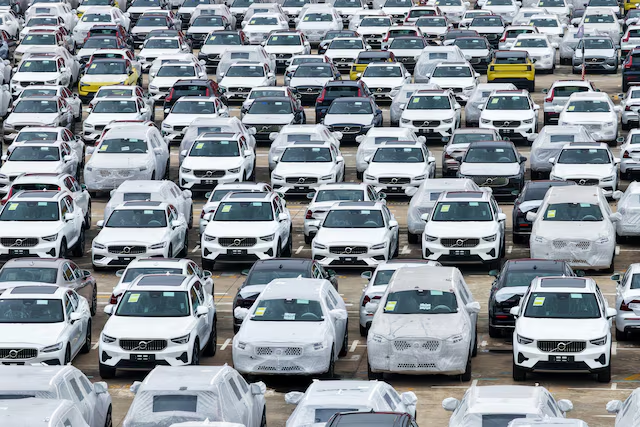
Mexico has announced a major change to its trade policy. The country plans to raise tariffs on cars from China to 50%. The current rate is 20%. Officials say the move aims to protect local jobs and industries. Analysts believe it is also meant to calm growing pressure from the United States over China’s growing role in Latin American markets.
The announcement came from Mexico’s Economy Ministry on Wednesday. It is part of a wider plan to raise tariffs on several imported goods. The new measures will affect sectors such as cars, steel, textiles, toys, and motorcycles. Officials estimate that the changes will apply to about $52 billion worth of imports.
Economy Minister Marcelo Ebrard explained the move to reporters. He said the tariffs on Chinese cars already exist, but the new policy will push them up to the highest level allowed under global trade rules. He argued that without stronger protection, Mexican companies cannot compete against cheaper imports. Ebrard added that many Chinese cars are sold in Mexico below what the government considers fair reference prices.
The new tariffs will affect imports from countries that do not have trade agreements with Mexico. This includes China, South Korea, India, Indonesia, Russia, Thailand, and Turkey. According to the Economy Ministry, about 8.6% of all imports will face higher tariffs under the plan. The government believes this will protect about 325,000 industrial and manufacturing jobs that are currently at risk from cheaper foreign goods.
The plan does not only target automobiles. It also includes a 35% tariff on imports of steel, toys, and motorcycles. Textile products will face tariffs ranging between 10% and 50%. The goal, according to officials, is to support Mexican industries and safeguard employment.
China has responded sharply to the news. A spokesperson from its foreign ministry said that China opposes restrictions placed under what it called “various pretexts.” The spokesperson said China hopes Mexico will choose to work together to support global economic recovery and trade growth. China warned that it would protect its rights and interests if it faces unfair trade barriers.
The new tariff plan still needs approval from Mexico’s Congress. The ruling party and its allies hold a large majority, so the proposal is likely to pass. If approved, the new tariffs could be in place soon.
The timing of Mexico’s move is notable. The United States has been pressing countries in Latin America to reduce their economic ties with China. Washington views China as its main rival for influence in the region. U.S. officials have warned that Chinese companies could use Mexico as a backdoor to access the North American market. They fear this could allow Chinese firms to bypass U.S. tariffs by assembling products in Mexico and then exporting them duty-free under regional trade deals.
Trade experts say Mexico’s decision may be an effort to avoid trade tensions with the U.S. Over the last decade, Mexico’s trade deficit with China has doubled. It reached $120 billion last year. U.S. analysts say this growing imbalance has raised concerns in Washington. Mariana Campero, an expert on the Americas at a U.S.-based think tank, said that the U.S. would not allow China to use Mexico as a gateway into its market.
Interestingly, Ebrard himself had spoken out against tariffs earlier this year. He had argued that higher tariffs could harm economic growth and push up prices. But the sharp increase in Chinese imports appears to have changed the government’s stance. Mexico now seems willing to adopt stronger protectionist measures, even if they could raise prices for consumers, to protect local industries and jobs.
If the plan becomes law, Mexico will have some of the highest tariffs on Chinese cars in the world. This would mark a major shift in its trade policy and could reshape its economic ties with China for years to come.
